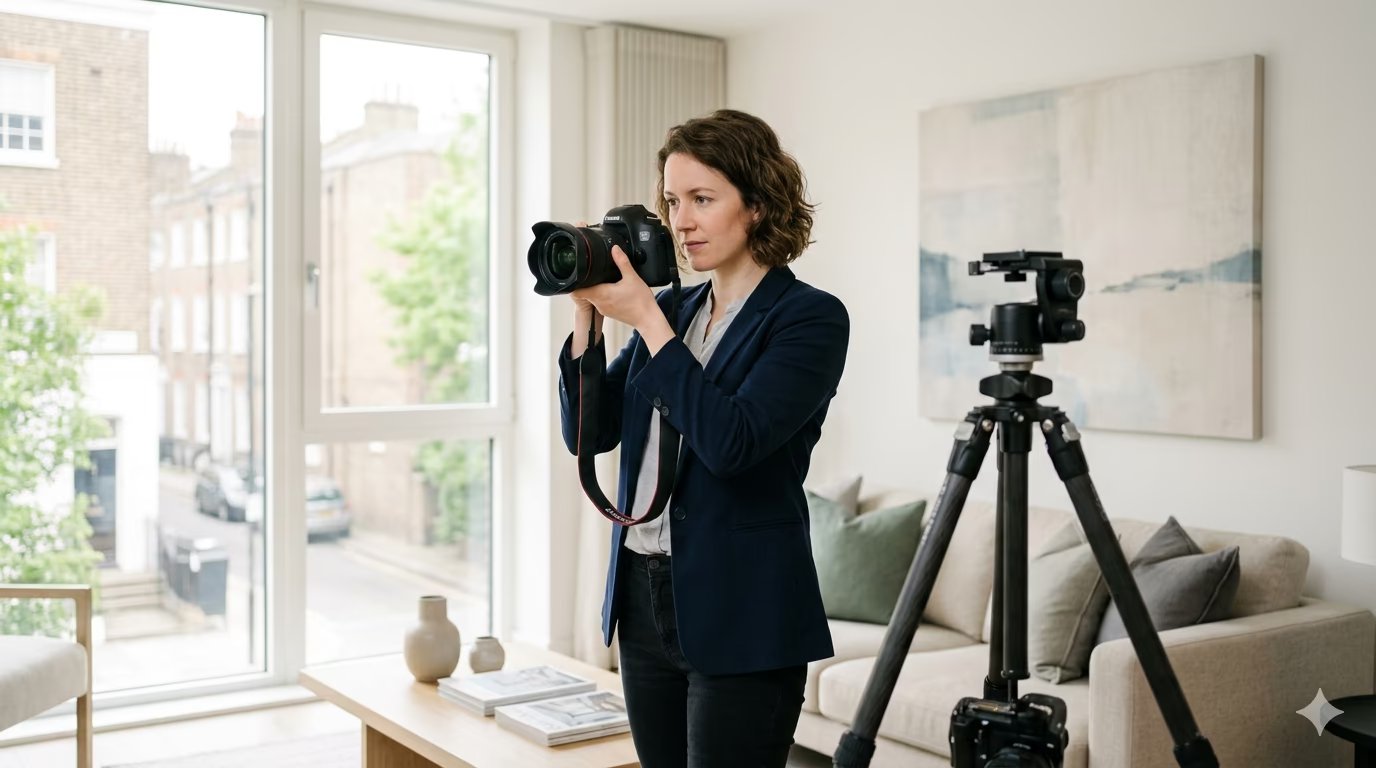
For many London properties, the first viewing does not happen at the front door. It happens on a phone screen, inside a property portal, while a buyer, tenant, landlord or relocation client scrolls quickly through similar listings. The photography has to do a difficult job in a small amount of time. It needs to show the space clearly, create enough confidence to enquire and avoid misleading the viewer about the size, layout or condition of the property.
That is why property photography London searches usually come from people who already have a practical problem. An estate agent may have a new instruction that needs to go live quickly. A letting agent may need fresh images before a rental relaunch. A landlord may be comparing whether professional photography is worth the cost. A developer may need consistent visuals across several units. A property manager may need images that help document condition, presentation and marketing readiness.
The right answer is rarely just to book someone with a camera. Good property photography should fit into the wider listing process. It should work with the floor plan, virtual tour, EPC, compliance documents, brochure, portal listing and internal workflow. Property Motion is built around that wider property preparation journey. The aim is not only to take better photographs, but to help property professionals prepare, present, comply, list and manage each property more efficiently.
What Is Professional Property Photography?
Professional property photography is the process of creating clear, accurate and market-ready images of a property for sales, lettings, portfolio marketing or property presentation. In London, this often includes residential flats, family homes, HMOs, short-let units, commercial spaces, new-build units and premium properties.
A professional shoot normally focuses on the rooms and features that help a buyer or tenant understand the property quickly. That means the photographer should think about light, room order, angles, lens choice, vertical lines, exterior shots, lifestyle details, available space and image consistency.
Professional photography should not make a property look like something it is not. It should make the property easier to understand and more appealing within an honest presentation. This is important because listing visuals are part of the information a potential buyer or tenant uses before making an enquiry.
What a good property photography shoot should achieve
A strong shoot should give users a realistic sense of the space. It should show the main rooms, important features and any outdoor areas in a logical sequence. The images should be bright enough to be useful, but not edited so heavily that the viewer feels misled when visiting the property.
For estate agents preparing a new instruction, photography should also support the vendor presentation. Consistent images help the agency look more professional and make the listing easier to compare with other properties in the same price range.
For landlords and letting agents, the goal is slightly different. Rental photography should help the right tenant decide whether the property is suitable. It should make the layout, condition and key facilities easy to understand without hiding important details.
Why this matters in London
London is a fast and varied property market. A studio flat, period conversion, ex-local authority apartment, new-build unit and premium townhouse all need different photographic handling. The same approach does not work equally well for every property type.
A small flat may need careful angles to explain layout without exaggerating space. A premium property may need more time, more detail shots, stronger editing and a wider marketing package. A rental property may need speed, clarity and a practical image set that helps reduce low-quality enquiries.
The simplest test
A good image set should help someone answer this question before they enquire: can I understand the property well enough to take the next step?
Why Property Photography Is More Than Better Pictures
Good photography sits inside the wider listing workflow. It affects how the property is perceived, how quickly the listing can be prepared, how many questions the agent receives and how confidently buyers or tenants move to the next step.
This does not mean professional photography guarantees enquiries, viewings or offers. Market conditions, pricing, location, property type, portal exposure and demand all matter. But weak images can reduce clarity and make a property harder to assess online.
Property Motion treats photography as one part of the property preparation process. The same property may also need 2D and 3D floor plans, a 3D virtual tour, EPC arrangements, compliance checks or broader listing assets. When these services are coordinated properly, the property can move from preparation to listing with less supplier administration.
The difference between visual appeal and useful presentation
A visually attractive image is helpful, but a useful property image does more than look good. It shows relationships between rooms, natural light, storage, room function and property condition. It gives the viewer enough context to understand what they are seeing.
For example, a bright bedroom image may look good, but it becomes more useful when the sequence also shows the hallway, living area, kitchen, bathroom and exterior. The buyer or tenant can then connect the images to the floor plan and form a more complete view.
Where many listings lose trust
Listings can lose trust when images are heavily filtered, room angles are misleading, important spaces are missing or the order feels confusing. The user may still enquire, but they may arrive at the viewing with different expectations. That can waste time for the agent, landlord and applicant.
What Should Be Included in a London Property Photography Shoot?
The exact image list depends on the property, but most shoots should capture the spaces that matter to decision-making. A one-bedroom flat does not need the same number of images as a five-bedroom house, but both need a clear visual story.
A typical image set may include exterior shots, entrance, reception room, kitchen, bedrooms, bathrooms, garden or balcony, special features, communal areas where relevant and local context where appropriate. For premium instructions, detail shots may also be useful, especially when the property has design-led finishes, period features or new refurbishment work.
Core spaces to capture
The most important spaces are usually the rooms that affect value, lifestyle and suitability. Living spaces, kitchen, main bedroom, bathroom and outdoor space often carry the most weight.
For rental listings, practical details can also matter. Tenants may want to see storage, appliances, work-from-home space, natural light and the condition of fixtures. For sales listings, buyers may focus more on layout, proportions, character, views and the potential use of each room.
- Reception and main living areas
- Kitchen and dining spaces
- Bedrooms with clear room context
- Bathrooms and shower rooms
- Exterior frontage where available
- Garden, terrace, balcony or communal outdoor areas
- Building entrance or communal areas where relevant
- Key details such as fireplaces, joinery, finishes or views
Images that should not be forgotten
Small but important details are often missed when a shoot is rushed. These may include the entrance, hallway, utility space, storage cupboards, outside approach, communal areas and views from the property. These details can help users understand the property more fully.
A practical rule for agents
Before the shoot, ask whether each image will help someone decide to enquire, book a viewing or understand the property. If an image does none of these things, it may not need to be part of the final selection.
Need help with this service in London?
Tell us your postcode and our team will confirm pricing, availability and the best
certificate package for your portfolio.
Property Photography London Cost Factors
The cost of property photography in London can vary because not every property or instruction needs the same level of work. A simple rental refresh is different from a premium launch package. A small flat is different from a large family home. A same-day urgent shoot may be priced differently from a planned appointment.
Common cost factors include property size, number of final edited images, travel area, turnaround time, editing requirements, optional add-ons and whether photography is booked with other services such as floor plans, virtual tours or compliance appointments.
Property Motion lists professional property photography services as part of a wider service directory, with related options such as floor plans, virtual tours and compliance services.
Common price drivers
The number of final images often matters because more rooms, more features and more editing time can increase the amount of work. Larger properties may also require more time on site. Premium properties may need more careful staging, composition and post-production.
Urgency can also affect scheduling. If a listing needs to go live quickly, the photography booking may need to be coordinated with access, tenant availability, keys, agent diaries and other required services.
| Factor | Why it affects the shoot | What to check before booking |
|---|---|---|
| Property size | Larger properties usually need more time and more final images | Confirm room count, outdoor spaces and approximate size |
| Image count | More selected images can mean more editing and delivery work | Ask how many edited images are included |
| Turnaround time | Urgent delivery may require faster editing or scheduling priority | Confirm when final images will be delivered |
| Extra services | Floor plans, virtual tours, video or EPC can change the booking scope | Check whether services can be coordinated together |
| Property condition | Clutter, poor lighting or unfinished areas can reduce image quality | Prepare the property before the photographer arrives |
Why the cheapest quote may not be the best comparison
A low quote may look attractive, but it is important to compare what is included. Check whether editing is included, how many images are delivered, whether usage is clear, whether turnaround is realistic and whether the photographer understands property listing requirements.
How to Prepare a Property Before the Shoot
Preparation often has more impact than people expect. A professional photographer can improve composition, lighting and editing, but they cannot fully solve clutter, unfinished cleaning, poor access or rooms that are not ready.
For landlords and agents, preparation should start before the appointment. The person arranging access should confirm keys, parking, tenant awareness, room availability and any areas that should or should not be photographed. If the property is occupied, the tenant should be told what to expect.
Room-by-room preparation
The property should be clean, tidy and accessible. Curtains and blinds should be arranged to maximise natural light where possible. Personal items, laundry, bins, loose paperwork and excessive clutter should be removed. Beds should be made, bathroom surfaces cleared and kitchen worktops simplified.
- Open curtains and blinds where appropriate
- Remove clutter from floors, worktops and surfaces
- Make beds and straighten soft furnishings
- Clear bathroom products and personal items
- Hide bins, cleaning supplies and loose cables
- Turn on lights where they improve the room
- Make sure all rooms are accessible
- Prepare keys, access notes and parking information
Occupied rental properties
Occupied rental properties need particular care. Tenants may not prepare rooms in the same way a landlord or agent would. Clear communication before the shoot helps avoid awkward situations and improves the chance of a useful image set.
One simple preparation message
A useful tenant message should explain the appointment time, expected duration, rooms to be photographed and simple preparation steps. It should also avoid promising that the shoot will take less time than it realistically might.
Want to save time?
Book your property service with Property Motion and let our team confirm the right
service, availability and next steps.
Professional Photography vs Phone Photos
Phone cameras are better than ever, and for internal records or quick updates they can be useful. But phone photos and professional property photography do not usually serve the same purpose.
A phone photo can document a condition issue. Professional photography is designed to create a market-ready visual set for portals, brochures, email campaigns, social media and agency presentations. The difference is not only the camera. It is the process, composition, editing consistency and understanding of how property users read images.
When phone photos may be enough
Phone photos may be enough for maintenance updates, internal notes, quick progress records or informal communication with a contractor. They can also help a landlord or agent identify what needs attention before a professional shoot.
When professional photography is more appropriate
Professional photography is more appropriate when the property is being listed, relaunched, presented to a vendor, marketed to tenants, promoted through social media or used in a brochure. In those cases, consistency and clarity matter more.
A practical comparison
| Use case | Phone photos | Professional photography |
|---|---|---|
| Maintenance update | Usually suitable | Usually unnecessary |
| Portal listing | Often limited | More suitable |
| Premium property launch | Not ideal | Strongly recommended |
| Condition evidence | Useful | May be too formal |
| Brand consistency | Difficult to control | Easier to standardise |
How Photography Works With Floor Plans and Virtual Tours
Photography is strongest when it works with other listing assets. Images show the atmosphere and condition. A floor plan explains layout and scale. A virtual tour gives remote viewers a more immersive view of the property.
Together, these assets help buyers and tenants make better early decisions. They may also reduce repeated questions about room order, access to outdoor space or how different areas connect.
Photography plus floor plans
A floor plan supports the photographs by showing the structure behind the images. Without a floor plan, users may struggle to understand where each room sits. This is especially relevant for split-level homes, converted flats, period properties and larger houses.
Property Motion supports floor plans in London as part of the listing preparation process. This can help agents and landlords create a more complete property presentation.
Photography plus virtual tours
A virtual tour can be useful when viewers cannot easily attend in person, when the property is premium, when the landlord or seller wants stronger remote engagement or when agents want to qualify enquiries before arranging viewings.
The goal is not to replace every viewing. It is to give potential buyers or tenants more confidence before they take the next step.
The combined asset logic
Photography attracts attention. Floor plans explain structure. Virtual tours add movement and context. Compliance documents help the property move toward listing or occupation. A coordinated workflow reduces the friction between these steps.
Compliance and Listing Readiness
Property photography is usually a marketing service, but it often happens at the same stage as compliance preparation. A landlord preparing a rental property may also need an EPC, Gas Safety certificate, EICR or other checks depending on the property and circumstances.
This is why it can be inefficient to treat every service as a separate job. Each separate supplier may need access, keys, scheduling, updates and delivery follow-up. For busy agents and landlords, the hidden administration can become more frustrating than the service itself.
Property Motion helps coordinate marketing and compliance services through one platform. Relevant services include property compliance management, photography, floor plans, virtual tours, EPCs and other property preparation services.
Material information and better listings
The UK Government has consulted on material information in property listings, focusing on how better information can support buyers and property professionals during residential transactions. You can read the GOV.UK material information in property listings page for official context.
Photography alone is not the same as material information, and it should not be treated as a legal substitute. However, clearer visual presentation can sit alongside better property information to create a more useful listing experience.
What this means for agents and landlords
A property should not be prepared in disconnected pieces. Photography, floor plan, EPC and other required assets should be planned together where possible. That does not mean every property needs every service, but it does mean the workflow should be clear before the listing goes live.
A Realistic Booking Workflow for London Agents and Landlords
A professional shoot works best when the process is clear before anyone arrives at the property. The workflow should answer who is attending, what is being captured, how access works, what extras are needed and when the final files are expected.
For an estate agent preparing a new sales listing, the workflow may start with the instruction details, then photography, floor plan, possible virtual tour and brochure assets. For a letting agent, the workflow may include photography plus compliance checks for a tenant-ready listing. For a landlord, it may be a one-off booking before advertising the property.
A simple Property Motion style workflow
The Property Motion approach can be summarised as preparation, presentation, compliance, listing and ongoing management. The exact booking may vary, but the logic stays the same.
- Identify what the property needs
- Select photography and any compatible services
- Confirm property details and access
- Coordinate the appointment
- Capture the required listing assets
- Deliver edited images and related outputs
- Use the assets for portals, brochures and marketing
Questions to answer before booking
Before arranging the shoot, confirm the property type, occupancy status, location, preferred date, number of images needed, access instructions and whether floor plans or virtual tours are required.
What can slow down delivery
Common delays include unclear access, tenant not informed, property not prepared, missing keys, poor weather for exterior shots, unclear service scope and late requests for additional assets.
How to Judge Photography Quality Before Choosing a Provider
Choosing a property photography provider should be based on more than price. Look at image consistency, vertical lines, natural lighting, room sequence, editing style and whether the images feel accurate.
Over-edited images can create short-term visual appeal but lower trust at the viewing stage. Under-edited images may make the property look darker or less cared for than it is. The best property photography balances clarity and appeal.
Portfolio signs to look for
A strong portfolio should show different property types, not only one style of premium interior. London property is varied, so the provider should be comfortable with flats, houses, rental properties, compact spaces and larger homes.
Look for images that show rooms clearly, preserve vertical lines, avoid extreme distortion and maintain consistent colour. Pay attention to bathrooms and small bedrooms because these are often harder to photograph well.
Questions to ask
- How many edited images are included?
- Can floor plans or virtual tours be booked at the same time?
- What is the usual turnaround time?
- How are final images delivered?
- Can the images be used on portals, brochures and social media?
- What happens if the property is not ready on arrival?
The trust test
A provider should explain the process clearly without making unsupported claims. Good service is practical, transparent and consistent.
Common Mistakes That Weaken Property Listings
Even good properties can be poorly presented. The most common mistakes are often simple and avoidable.
One mistake is uploading too few images. Another is using images in a confusing order. Some listings show bedrooms before the main living space, or repeat similar angles while missing important rooms. Other listings rely on dark phone photos, stretched wide-angle shots or images taken before cleaning is complete.
Presentation mistakes
Poor preparation is a major issue. A cluttered room can distract viewers from the space. Personal items can make the property feel less market-ready. Unmade beds, bins, dishes and visible cables can reduce the quality of even a professionally photographed listing.
Workflow mistakes
Some agents and landlords book photography first, then realise they also need a floor plan, EPC or compliance check. That can mean another appointment, another access arrangement and another delay.
A better approach is to review the property requirements before booking. The Property Motion services directory can help users understand which marketing and compliance services may be relevant.
Case Scenario: A Two-Bed London Flat Before Listing
Imagine a letting agent has a two-bedroom flat in South London that needs to be relaunched after a tenancy ends. The property is clean but empty, the previous photos are three years old and the EPC is near expiry. The landlord wants the listing live quickly.
A fragmented workflow might involve one photographer, a separate floor plan provider, a separate EPC assessor and multiple emails to coordinate keys. Each supplier may have different availability, delivery times and invoice processes.
A more coordinated workflow would start by identifying the required outputs, then booking compatible services together where possible. The photography can capture the property in its current condition, the floor plan can clarify layout and the EPC can support compliance preparation.
What the agent gains
The agent gains a cleaner listing package, fewer separate bookings and a more organised route to publication. The landlord gets a clearer view of what has been done and what remains outstanding.
What still needs to be realistic
The property still needs to be priced correctly. The market still matters. Professional photography does not guarantee a let or sale. Its role is to improve presentation and reduce avoidable uncertainty in the listing process.
Choosing a Property Photography Package
The right package depends on the property, audience and marketing channel. A basic image set may work for a straightforward rental. A premium property may need photography, floor plan, video, virtual tour and enhanced editing. A portfolio landlord may need consistency across several units.
Match the package to the property
Do not buy extras just because they are available. Start with the property goal. Is the listing for sale or rent? Is the property occupied or vacant? Is it premium, compact, unusual, newly refurbished or difficult to explain through images alone?
For properties where layout is not obvious, floor plans may be more important. For remote applicants, virtual tours may help. For social campaigns, video can be useful. For compliance-led rental preparation, EPC and safety certificates may need to be planned alongside marketing assets.
A practical package guide
| Property situation | Useful services | Why it may help |
|---|---|---|
| Standard rental relaunch | Photography and EPC check | Refreshes listing visuals and supports compliance preparation |
| Sales instruction | Photography and floor plan | Improves presentation and explains layout |
| Premium home | Photography, floor plan, video and virtual tour | Creates a richer marketing asset set |
| Portfolio landlord | Photography plus compliance coordination | Reduces supplier management across multiple properties |
Best practical starting point
For most listings, professional photography and a floor plan are a sensible foundation. Add virtual tours, video or compliance services when they match the property and marketing goal.
Summary: Better Property Photography Starts With Better Preparation
Property photography in London should not be treated as a last-minute upload task. It is part of the property preparation process. The images should help buyers and tenants understand the space, help agents present instructions consistently and help landlords move toward a stronger listing.
The most effective shoots are planned properly. The property is prepared, the image requirements are clear, compatible services are considered and the final assets fit the listing strategy.
Property Motion helps estate agents, letting agents, landlords, property managers and developers coordinate the services needed to prepare and present a property. That can include photography, floor plans, virtual tours, EPCs, compliance support and other listing assets through one streamlined workflow.
To plan your next property shoot, review the property type, decide which assets are needed and request a quote or booking through Property Motion. The goal is simple: prepare the property properly, present it clearly and reduce the admin between instruction and listing.
Keep reading
Floor Plans London: 2D and 3D Property Plans for Better Listings
Property Marketing Agency London for Agents and Landlords
3D Virtual House Tour London: A Practical Guide for Agents and Landlords
EPC Certificate Cost London Guide for Landlords and Agents
Frequently asked questions
The cost can vary depending on property size, number of edited images, turnaround time, location and whether extra services such as floor plans, video or virtual tours are added. Always compare what is included rather than looking only at the headline price.
It can be useful for rental listings because clearer images help tenants understand the property before enquiring. It does not guarantee faster letting, but it can improve presentation and reduce uncertainty.
Clean and declutter the rooms, open curtains where appropriate, clear surfaces, make beds, remove personal items, prepare access details and make sure every room that needs to be photographed is available.
A floor plan can make the listing easier to understand because it explains layout and room relationships. For many sales and lettings listings, photography and floor plans work better together than either asset alone.
Yes. Property Motion helps coordinate property marketing and compliance services, which may include photography, floor plans, virtual tours, EPCs, EICRs and Gas Safety certificates depending on the property requirements.
No. Photography can improve presentation, but enquiries and viewings also depend on price, location, demand, timing, property condition and the wider marketing strategy.
The right number depends on property size and layout. A small flat may need fewer images than a large house, but every listing should include the main rooms, exterior where relevant and any important features that help users understand the property.
They can be photographed, but preparation and communication are important. Tenants should be informed in advance, personal items should be reduced where possible and access should be clearly arranged.
Need professional property photography in London?
Property Motion helps estate agents, landlords and property professionals arrange photography, floor plans, virtual tours, EPCs and compliance services through one coordinated workflow.